The Rise and Fall of Banda Singh Bahadur | Part 1 of 3
Here is part 1's excerpt from my book about the legendary Sikh warrior Banda Singh Bahadur.

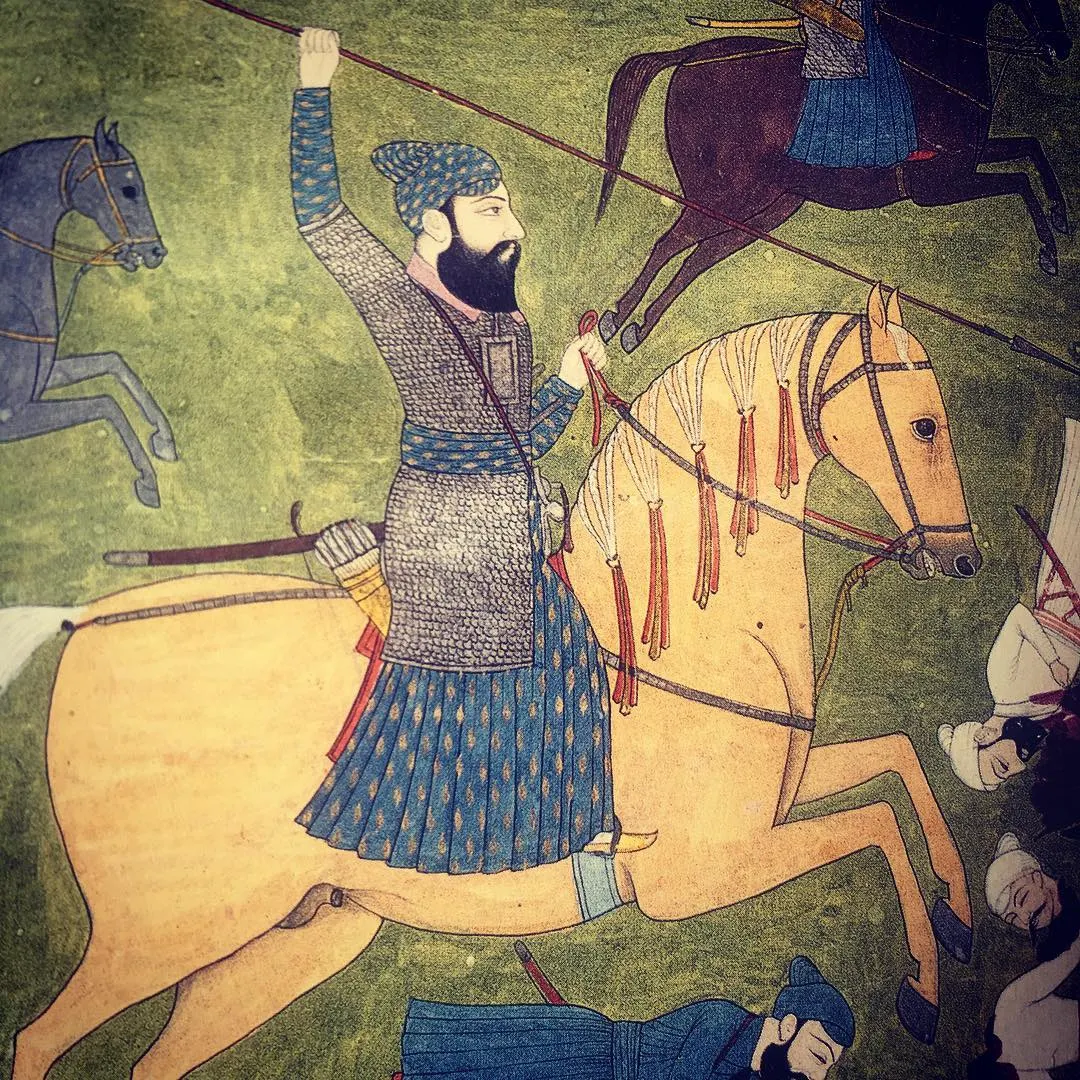
We were making one stop on the road to Anandpur Sahib, at Fateh Burj, the newly constructed memorial for Banda Singh Bahadur, the famed Sikh warrior. The Fateh Burj is just outside of Chandigarh, on the site of Banda’s improbable victory over the Mughal Empire’s Imperial Army in 1710. As we drove across the open plains, we could see a grey tower piercing the morning haze; soon, it was looming over us like a towering watchman. At a modest 328 feet, the Fateh Burj was the tallest tower in India. Its three-tier structure was designed like an old fort, with a gray stone facade and bold, jutting edges. It was surrounded by gardens dotted with small ponds, fountains, and looming statues of soldiers in battle poses or mounted on warhorses.

We entered the tower through a high arching gate. It was cavernous inside, the ceiling stretching far above the museum dedicated to Banda Singh. We went inside the museum and was greeted by our guide, an Amritdhari (a Sikh woman who has taken Amrit and wears a turban) in her early 20s. She pointed out paintings, artifacts, and old manuscripts hanging along the walls and displayed beneath glass tables as she told us about Banda Singh’s life and the great battle he fought here. I already knew Banda's story, which was the stuff of a Hollywood epic—from humble beginnings to war hero to undisputed ruler to a bloody execution.
Born in 1670 north of Punjab in the Kashmir/Jammu region near the Himalayan foothills, Banda, whose given name was Lachman Dev, left home at fifteen for reasons unknown. He became a nomad, roaming through Punjab until he came across a group of Hindu Sadhus. He was drawn to their mystical, reclusive lifestyle and given a new name, Madho Das. His wanderings came to an end in central India at Nanded, Maharashtra, where he helped establish a monastery. He lived there uneventfully for the next twenty years.

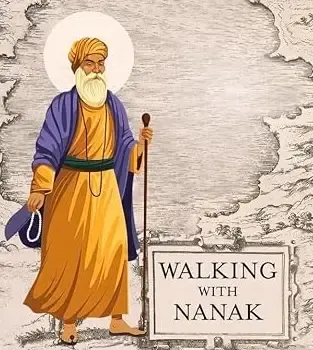
By this time, the Islamic Mughal Empire had ruled most of Afghanistan, Pakistan, and India for about two hundred years, coinciding with the emergence of Sikhism and its founder, Guru Nanak, in the late 15th century. Intolerance was the driving force of the Mughal Empire, which tortured and killed thousands of Sikhs for refusing to convert to Islam, defying Mughal authority, and leading armed resistance. The Mughals also tortured and executed Sikh spiritual leaders—Guru Arjan Dev in 1606 and Guru Tegh Bahadur in 1675. The Mughal Empire’s savage persecution of Sikhs encouraged Sikhism to evolve from a pacifism to militancy for self-defense.
In 1704, a Mughal official, Wazir Khan, the Governor of Sirhind, captured the two young sons of the tenth Sikh Guru, Gobind Singh. Wazir Khan offered to release them if they converted to Islam, and when they refused, he had the seven- and nine-year-old boys bricked alive into a wall. By 1708, there was a new Mughal emperor, Bahadur Shah. He struck a tenuous peace with Guru Gobind Singh, who demanded retribution for his sons' executions, but the new emperor evaded Singh’s request while attending to local uprisings in central India. Realizing Shah wasn’t going to provide any justice for his murdered sons; Gobind Singh left Shah and led his men further into central India.
Along the way, they stopped in Nanded to rest. It was there that Guru Gobind Singh met Madho, now 38. He welcomed the Sikhs to his humble abode. He was probably familiar with Guru Gobind, a fellow Punjabi. History doesn’t tell us what transpired between the Guru and Madho, but soon after their meeting, Madho converted to Sikhism and was given another new name—Banda Singh Bahadur. He became Guru Gobind Singh’s dedicated disciple, and he gave Banda a mission: avenge his murdered sons and all Sikhs who had been killed for refusing to abandon their faith. According to legend, the Guru sent Banda off to Punjab with his personal battle standard, drum and five arrows from his own quiver.
I wondered what Guru Gobind Singh saw in this untested, inexperienced spiritual nomad to make him think that Banda was the man to extract vengeance from the mighty imperial Mughal Army? Many would have refused what sounded like nothing less than a suicide mission, but Banda accepted Gobind Singh's challenge immediately. Perhaps that was what the Guru saw in his new disciple: willingness, along with boundless reservoirs of untapped courage and faith.
Banda marched north to Punjab with Gobind Singh's small band of soldiers, while he remained in Nanded. It’s unclear why he didn’t ride with Banda himself. Perhaps he feared that he would attract too much attention, sabotaging Banda’s mission before it began? A month later, Gobind Singh survived an attempted assassination (some speculate it was orchestrated by Wazir Khan because he felt politically threatened by Singh’s cordial relationship with the new Mughal emperor), but soon reinjured the still healing wounds and died. The Sikh Gurus are surrounded by mythical, miraculous stories, and I wondered if Gobind Singh foresaw his own end when he sent Banda to avenge his sons, a mission that Singh knew he wouldn’t live to accomplish.
When Banda and his men arrived on the outskirts of Delhi, just south of Punjab, he announced himself to the local Sikhs by dispatching the Guru’s letters and asking them to join his banner. Though Guru Gobind Singh had declared there would be no more living Gurus after his death, Banda now presented himself not just as a military commander but a spiritual authority as well. Crowds of Sikh farmers and peasants gathered to listen to Banda’s fiery sermons, which tapped into growing resentment of the Mughals’ burdensome taxes and cruel methods of control. Banda’s bold calls for revenge against the Mughals, made with Guru Gobind Singh’s official blessing, brought new recruits to his growing army.
Punjab was a powder keg. And Banda was the match that would light the flames of revolt.
Continue to Part 2 of 3
Punjab Now and Then Newsletter
Join the newsletter to receive the latest updates in your inbox.