Post Partition River and Language Concerns | Part 1 of 2
Here's an excerpt from my book about Punjab's rivers and having Punjabi recognized as the state language post Partition.

Even before Chandigarh was officially inaugurated as the state’s capital in 1953, problems had emerged in post-Partition Punjab. The new Indian government wanted to declare Hindi as the national language but met resistance in the southern and eastern regions of the country, which resulted in the creation of new states, like the Telugu-speaking Andhra Pradesh and a Marathi language state, among others. These new states all had something in common—Hindu majorities. When promises of an autonomous Sikh state evaporated post-Partition, the Sikh community, led by the Punjabi Suba movement, lobbied to have Punjabi—the language spoken by the majority of people in the region for over a thousand years and the only language spoken by Sikhs—declared as the official state language of Punjab. Seeking to limit the power of Punjab’s Sikh majority, the Indian government resisted, and the official language of Punjab remained Hindi.
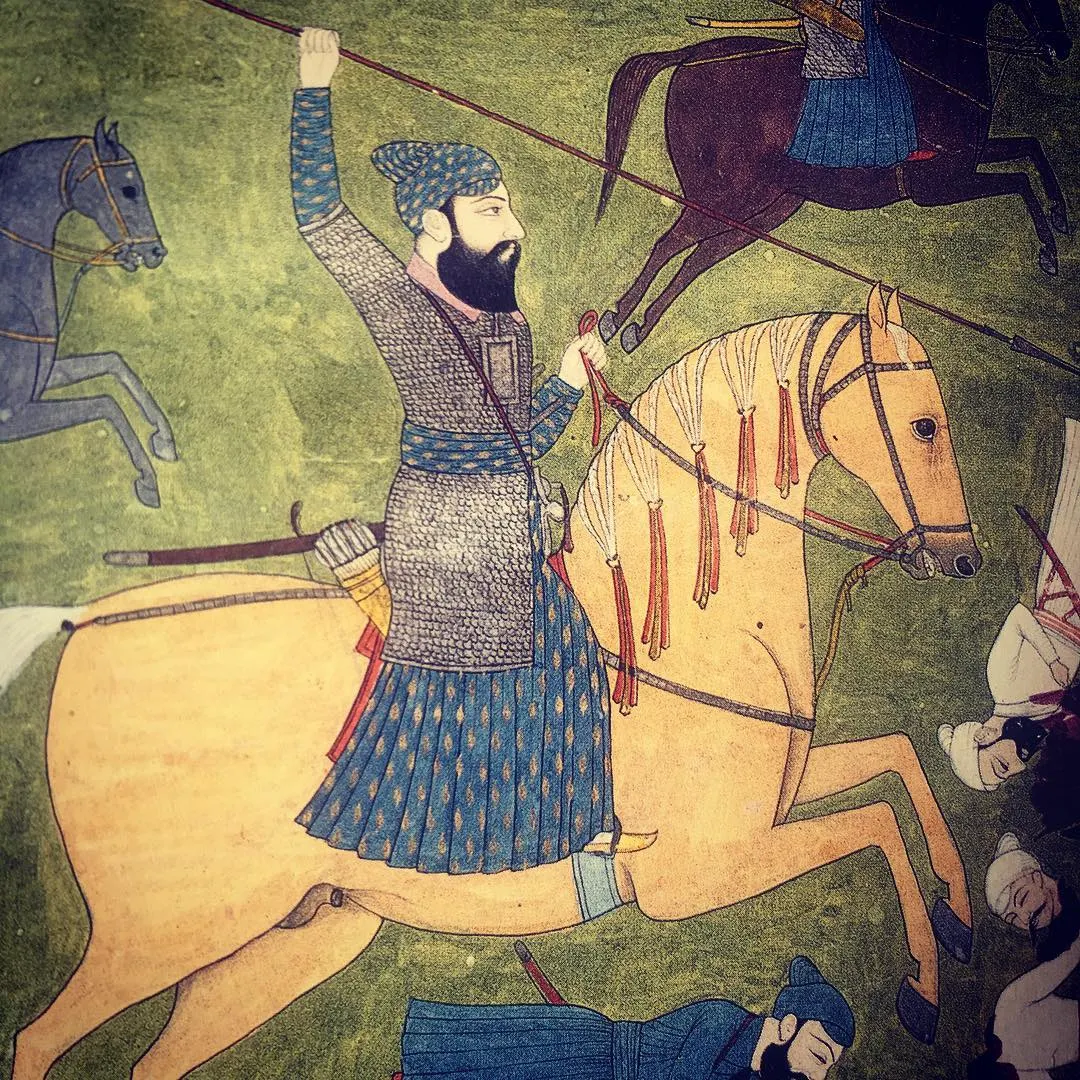
In 1962 China invaded India over a disputed border near the Ladakh region in the northwest. Ladakh had once been ruled by Tibet, but in 1834, Zorawar Singh, an ambitious Sikh general, annexed Ladakh to the Sikh empire. In 1841 he marched further east, capturing key towns until reaching central Tibet at Taklakot. The alarmed Chinese empire halted the Sikhs’ advance by dispatching troops during the winter season. The Chinese forces cut off the Sikh supply lines, encircled the Sikh army, and waited. The Sikhs were stranded at twelve thousand feet, far removed from the mild plains of Punjab. Outnumbered and weakened by frostbite and starvation, Zorawar and his men were butchered, but the Sikhs reoccupied Ladakh the following year. Ladakh remained in India’s hands without dispute until Partition.
Jawaharlal Nehru, India's first post-Partition prime minister, wanted to expand India's border past Ladakh, east into the Aksai Chin region. In 1954, the newly established People’s Republic of China came to a tentative agreement with the newly independent India, but in 1959, this unsteady peace unraveled when Nehru gave the Dalai Lama asylum in India after a failed Tibetan uprising against Chinese rule. Fearing that Nehru planned to invade Tibet, China demanded that India concede the Aksai Chin region, but Nehru refused. Skirmishes broke out along the border, and in October 1962, China invaded. India was woefully unprepared and undermanned. China took control of the region within a month and established a new border, which India refused to recognize. Control of Ladakh and Aksai Chin is still disputed today.

During the Chinese invasion, the Sikhs suspended the Punjabi Suba campaign and volunteered in tremendous numbers to defend India. The Sikhs fought valiantly. The Battle of Bum La Pass, where Sikhs were outnumbered thirty to one, exemplified Sikh efforts. The battle ended in a failed bayonet charge, but the Sikhs almost defeated the Chinese troops. Noting the Sikhs loyalty to India, Nehru began to doubt his opposition to the Punjabi Suba demands, but once again, war intervened when Pakistan invaded the disputed Jammu and Kashmir border.
Prior to Partition, Jammu and Kashmir, located in the northernmost region of India, directly west of Ladakh, had been an important center for both Hinduism and Buddhism for roughly a thousand years. The Muslim-led Mughal Empire took control of the region from the 1580s to the 1750s, followed by the Afghan Muslim Durrani Empire from 1752 to 1819. After four centuries of Muslim rule in Jammu and Kashmir, Maharaja Ranjit Singh defeated the Afghans at the Battle of Shopian in 1819. When the Sikh Empire fell to the British in 1849, the British sold Jammu and Kashmir to a former Sikh general, Maharaja Gulab Singh, at a steep discount in return for his betrayal during the Sikh Wars. Jammu and Kashmir remained an independent princely state ruled by Gulab Singh’s heirs until Partition.
Because Muslims made up 77 percent of the population of Jammu and Kashmir, Pakistan insisted that the region should fall within its borders. Maharaja Hari Singh, the current and last ruler of Jammu and Kashmir in Gulab Singh’s line, hoped to remain independent, but when Pakistani-sponsored Muslim rebels formed a guerilla campaign and forced the issue by invading Kashmir, Hari Singh appealed to the Indian government for help and agreed to cede control of Jammu and Kashmir in return for their aid. Indian soldiers were dispatched, and they drove out the rebels. While Pakistan was able to retain a third of Jammu and Kashmir, the majority of Muslims lived in the Indian-controlled region.
In August 1965, after modernizing their army with $700 million in military aid from the US, Pakistan launched Operation Gibraltar. The Pakistani army, disguised as locals, secretly invaded Kashmir, and tried to recruit the local Muslims to join their cause, but the poorly coordinated attack was quickly repelled. India's counterassault crossed the agreed upon ceasefire line, resulting in the Indo Pakistani War of 1965, which was considered a political defeat for Pakistan because they failed to win Muslim Kashmiri support and gained no new territory.
Once again, the Sikhs had made significant contributions to India’s war effort—among all of India’s states, Punjab sent the most aid and volunteers. Lt. General Harbaksh Singh, the leader of the Western Command from Ladakh to Punjab, distinguished himself by halting the Pakistani tank offensive along India’s border. Those in the Indian government who still opposed the Punjabi Suba movement could not ignore the loyalty of the Sikh community during the recent wars. In 1966, the Indian government restructured and divided Punjab. Punjabi was made the official language of East Punjab. The new state of Haryana, with Hindi as its official language, was created out of southern Punjab. The northeast region of Punjab was added to the existing state of Himachal Pradesh, whose official language was Hindi. Chandigarh, the capital of Punjab, became the shared capital of Punjab and Haryana. At the peak of the Sikh Empire, Punjab spanned roughly 220,000 square miles. After it was partitioned again in 1966, India’s Punjab occupied only 19,445 square miles. Though the Sikh community had finally won Punjabi as its official state language, it had been a bittersweet victory.

Continue to Part 2 of 2.
Punjab Now and Then Newsletter
Join the newsletter to receive the latest updates in your inbox.